Information Centre
Categories
Examinations
Statement of VIPs
Address by the Hon’ble President of India Smt Droupadi Murmu on the occasion of Human Rights Day |
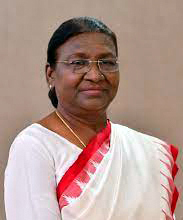
New Delhi, 10th December 2025. I am happy to join you all for commemorating the Human Rights Day. It is an occasion to remind us that the universal human rights are inalienable and they form the bedrock of a just, equitable, and compassionate society. Seventy-seven years ago, the world came together to articulate a simple yet revolutionary truth: that every human being is born free and equal in dignity and rights. India played an important role in shaping a global framework of human-rights. Our freedom fighters envisioned a world rooted in human dignity, equality, and justice. Hansa Mehta, one of the fifteen women members of our Constituent Assembly was also a member of the group engaged in the drafting of the Universal Declaration of Human Rights. She suggested a foundational change to the draft. She ensured that the rights enshrined in that global charter were expressed, not in terms of the ‘rights of man’, but in the inclusive and universal expression, ‘rights of all human beings.’ That such a historic shift was brought about by the expansive vision of an Indian woman is a matter of enduring pride for every Indian. Thus, India embraced the Universal Declaration of Human Rights as a co-creator of a universal moral covenant which resonated deeply with our civilizational ethos. Our ancient value of ‘Vasudhaiva Kutumbakam’, which means that the world is one family, is reflected in the idea of universal human rights. It is only apt that India's sustained commitment to the human-rights principles has been recognized globally. It is evidenced by our unopposed election to the United Nations Human Rights Council for a three-year term commencing in 2026 for the seventh time. Today, we also renew our ancient ideal of inclusion, captured in the words ‘Sarve Bhavantu Sukhinah’, which means ‘may everyone be happy’. We renew this inclusive spirit of ‘well-being of all’ as a modern pledge: that no one shall be left behind; that dignity is not negotiable; and, that justice must remain the birthright of every person in India. Our commitment is clear: to build a nation where every individual can live with freedom, respect, and equality, and where human rights are not only protected, but celebrated. Human rights are contained in the vision of our Constitution. Highlighting our Constitutional objectives, Babasahab Dr. Bhimrao Ambedkar had said, “We must make our political democracy a social democracy as well.” Human rights promote social democracy. Human rights encompass the right to live without fear, to learn without barriers, to work without exploitation and to age with dignity. We have reminded the world that human rights cannot be divorced from development. Also, India has always adhered to the timeless truth: ‘There is no peace without justice and there is no justice without peace.’ Ladies and gentlemen, Since the year 2019, with a view to enabling a holistic view of human- rights-issues, chairpersons of the National Commissions for Minorities, Scheduled Castes, Scheduled Tribes, Women, Protection of Child Rights and Backward Classes along with the Chief Commissioner for Persons with Disabilities are deemed to be members of the NHRC for dealing with the core issues before the Commission. It is heartening to note that NHRC India, the State Human Rights Commissions, along with judiciary and civil society have functioned as alert sentinels of our Constitutional conscience. देवियो और सज्जनो, यह बड़े संतोष की बात है कि पिछले कुछ वर्षों के दौरान राष्ट्रीय मानव अधिकार आयोग ने अनुसूचित जाति तथा अनुसूचित जनजाति समुदायों के लोगों, तथा महिलाओं और बच्चों से जुड़े अनेक विषयों का स्वयं संज्ञान लिया है। मुझे बताया गया है कि अब तक आयोग ने लगभग तीन हजार मामलों का स्वयं संज्ञान लिया है। कारागारों में बंद undertrial लोगों से जुड़े विषय पर मैंने अपने विचार व्यक्त किए हैं। इस दिशा में कुछ प्रयास भी किए गए हैं। मुझे यह जानकर प्रसन्नता हुई है कि मानव अधिकार आयोग द्वारा इस वर्ष आयोजित स्थापना दिवस समारोह के अवसर पर Human Rights of Prison Inmates विषय पर व्यापक विचार-विमर्श किया गया। मैं आशा करती हूं कि उस विचार-विमर्श के उपयोगी परिणाम निकलेंगे। महिलाओं का सशक्तिकरण और कल्याण, मानव अधिकार के प्रमुख आधार स्तम्भ हैं। ‘बेटी बचाओ, बेटी पढ़ाओ’ अभियान से बेटियों की शिक्षा को बढ़ावा मिला है, विशेषकर उन क्षेत्रों में जहां बेटियों की संख्या कम है। मुझे यह देखकर प्रसन्नता होती है कि सरकार की अनेक प्रभावी योजनाओं के माध्यम से महिलाओं की आर्थिक भागीदारी, सम्मान और आत्मनिर्भरता को बल मिला है। मुझे यह जानकर प्रसन्नता हुई है कि आयोग द्वारा सार्वजनिक स्थानों और कार्यस्थलों में महिलाओं की सुरक्षा के विषय पर सम्मेलन का आयोजन किया गया। ऐसे सम्मेलनों से निकले निष्कर्ष महिलाओं की सुरक्षा और सशक्तिकरण की दिशा में महत्वपूर्ण सिद्ध हो सकते हैं। इसके लिए मैं आयोग की पूरी टीम की सराहना करती हूं। शिक्षा, नागरिकों के सशक्तिकरण तथा उनके मानव अधिकारों की कुंजी है। एकलव्य मॉडल रेजिडेंशियल स्कूल और पीएम श्री स्कूल जैसे संस्थान गुणवत्तापूर्ण शिक्षा को सबकी पहुंच में लाते हैं। इन संस्थानों से वंचित वर्गों के विद्यार्थियों की शिक्षा को विशेष प्रोत्साहन मिला है। Ladies and gentlemen, I feel especially happy that today, the NHRC India is holding a conference on “Ensuring Everyday Essentials.” This aligns well with this year’s UN theme. It also reflects India’s focus on ensuring that essential services like health, education, housing, and other basic amenities are accessible to every citizen. Access to justice, especially for the poor, is given special thrust. I understand that stakeholders from diverse fields are participating in the conference to deliberate on critical issues concerning every-day essentials. I am pleased with the launch of the NHRC’s new mobile app. I have been briefed that the app will make the complaint-filing-mechanism of NHRC more accessible to all. People will also be able to track the status of their complaints. It will also enable young students to reach NHRC for internships and other opportunities of learning. The NHRC gives expressions to certain ideals of the State and the society. The Government of India has been translating such expressions into action, on a scale never seen before. Over the last decade, we have witnessed our Nation moving ahead with a different approach - from entitlement to empowerment and from charity to rights. The Government has been working to ensure that every-day essential services like clean water, electricity, cooking gas, healthcare, banking services, education, and improved sanitation become available to all. This uplifts every household and secures dignity. Over 40 million homes built for the poor have turned the right to shelter from dream into reality. The world’s largest food security program reaches approximately 800 million people. No Indian should sleep hungry is the mission of the program. Recently, the Government has notified the implementation of a major reform through the four Labour Codes related to wages, industrial relations, social security and occupational safety, health and working conditions. This transformative change lays the foundation for a future-ready workforce and more resilient industries. Together, these efforts reflect our national commitment that progress must be inclusive, reaching every corner of our country and every segment of our society. Ladies and gentlemen, Today, I call upon every citizen to recognize that human rights are not the sole responsibility of governments, the NHRC, civil society organizations and such other institutions. Protecting the rights and dignity of our fellow citizens is a shared duty. This duty rests with all of us as members of a compassionate and responsible society. Let us resolve to move ahead towards building ‘Viksit Bharat’ which will showcase an ideal blend of holistic development and social justice. Thankyou, Jai Hind! Jai Bharat! |
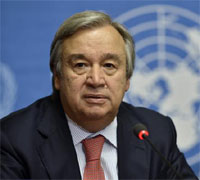
United Nations Secretary-General António Guterres message on Human Rights Day, 10 December 2025. |
|
Nearly eighty years ago, the Universal Declaration of Human Rights defined what every person needs to survive and thrive. It was a philosophical and political breakthrough — and it has been the bedrock of our global community ever since. Human rights — civil, political, economic, social and cultural — are inalienable, indivisible and interdependent. But recent years have brought a shrinking of civic space. We have grave violations that signal a flagrant disregard for rights, and a callous indifference to human suffering. Together, we have the power to confront these injustices: by protecting the institutions that make human rights a lived reality. Every day, the United Nations helps people around the world realize their most basic rights. Together with civil society and governments, we deliver food and provide shelter; support education and elections; clear mines; defend the environment; empower women; and strive for peace. But we cannot do it alone. This work depends on all people, everywhere, taking a stand. When we protect the most vulnerable, when we refuse to look away, when we speak up for the institutions that speak up for us, we keep human rights alive. Our rights should never take second place to profit or power. Let us unite to protect them, for the dignity and freedom of all. |
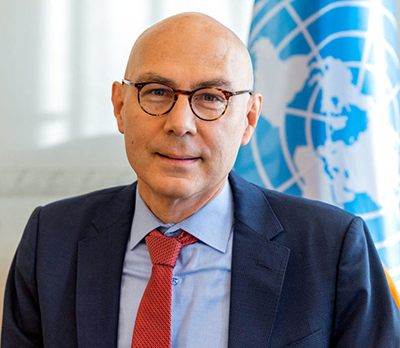
Volker Türk, United Nations High Commissioner for Human Rights, message on Human Rights Day, 10 December 2025 |
|
Human rights are deeply woven into our daily lives. Our rights are so essential to us that we may only notice them when they are taken away. They are about children having a good breakfast before they go to school, and a woman feeling safe walking home at night. They are about social support for an elderly man who has fallen sick. And about a student with a disability being treated fairly when applying for a job. They are about an LGBTIQ+ rights activist who can meet with people who advocate for respect and dignity. And they are about justice for prisoners who have been tortured in a war zone. Human rights empower people to overcome subjugation and oppression. Regardless of who we are, where we live, or what we do, we all want the same things: safety, dignity, and freedom. Many of today’s social movements are driven by these values. Young people in particular are determined to dismantle every brick in the wall of injustice. In this, they are writing the latest chapter of the struggle for freedom, equality, and dignity that began centuries ago. That struggle against colonialism, racism, sexism and all forms of discrimination laid the foundation of international human rights. After the horrors of two world wars, the Holocaust, and global economic collapse, these principles were set out in the Universal Declaration that we mark today. Our rights connect us all. Like water nourishing the roots of a tree, they are essential for our common humanity. Because when one root is denied water, the whole tree suffers. Pushback against human rights in one part of the world, or against one group of people, harms us all. Our lives are profoundly intertwined. Some of the poorest countries in the world are sinking into the ocean because of sky high carbon emissions in developed economies. Your mobile phone battery could depend on a child working in a cobalt mine. We all need to protect the human rights of all, mobilizing and inspiring each other, from the courts to the streets to the ballot box. Because human rights also offer solutions. They are our compass in turbulent times — guiding and steadying us through uncertainty. Each of you has the power to drive change. In your schools, workplaces, and on social media: call out injustice and stand up for free, open, and civil discourse. And call on your leaders to respect all human rights, for everyone. On Human Rights Day and every day, let us stand up for what is essential to us all. |
The message by NHRC, India Chairperson, Justice Shri V. Ramasubramanian on the eve of Human Rights Day. |

New Delhi, 9th December, 2025 “Greetings to everyone on the eve of Human Rights Day. Each year since 1950, the world comes together on 10th December to celebrate this day. It marks the adoption of the Universal Declaration of Human Rights (UDHR) by the United Nations in 1948. UDHR is a milestone document that has shaped the moral compass of humanity across the globe. For India, this day carries special significance. Our nation’s representatives played a meaningful role in shaping the UDHR, embedding in it the timeless ideals of dignity, justice and equality for all, the values that are deeply rooted in our own civilisational ethos and philosophy. This year’s theme, “Human Rights, Our Everyday Essentials,” reminds us that human rights are not distant dreams. They are the foundation of our daily lives. This theme reaffirms that human rights are not luxuries, but necessities that sustain hope and humanity. Human rights allow us to speak freely, live with dignity and dream without fear. By reconnecting people to these values, we seek to inspire awareness, confidence and collective action. Today, humanity faces unprecedented challenges including climate change, environmental degradation, conflict and terrorism, all of which test our shared commitment to equality and justice. Addressing them requires solidarity across borders and generations. The National Human Rights Commission (NHRC), India continues to play a pivotal role in strengthening this vision. Drawing upon India’s rich legacy of empathy, compassion and respect for human dignity amidst diverse cultural traditions, the Commission works tirelessly for the cause of human rights within the country besides promoting advocacy for them at international forums and across the Global South. Through its outreach, research and capacity building initiatives over the past three decades, the NHRC has remained steadfast in protecting the rights and voices of all people and particularly the vulnerable segments. On this solemn occasion, I call upon every individual to stand up for human rights to nurture a culture that upholds the spirit of “Sarve Bhavantu Sukhinah” i.e. let there be happiness for all. Guided by the Protection of Human Rights Act and inspired by the values of both the Constitution of India and the Universal Declaration of Human Rights, the Commission reaffirms its unwavering commitment to uphold the dignity and equality of every person.” |
Excerpts from the Inaugural Address of Mr. Justice J S Verma, the then Chairperson, National Human Rights Commssion on the occasion of the inauguration of the Indian Institute of Human Rights on 10 December 1999 (Human Rights Day) at New Delhi. |
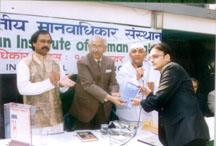
Today is the Human Rights Day and I am glad to note that the Indian Institute of Human Rights is being established on this auspicious occasion. All members of the human family must be treated as equal - equality being a human right. Human Rights are all those characteristics or attributes that are essential to life with dignity. The violation of human rights occurs when any act, or omission to act, results in a conseqence that is inconsistent with the dignity of the individual. Human Rights are natural rights which are non negotiable and do not depend on conferment by any authority. They are inherent in human existence. Enacting law is not enough unless there is a change in the thinking process of society as a whole. The remedy lies in education within the family, from the earliest stage of life and throughout society. The acknowledged index of civilisation for each country is its track record of respect for human rights in the country. There is an urgent need to rededicate to the upliftment of the common man and for developing a human rights culture in every sphere of life and in the instruments of governance. The main objective of the Institute should be to make the Protection of Human Rights Act as effective as possible by reading into it the intent behind the legislation and interpreting that to its fullest extent. The National Human Rights Commission is a complement to the institutions of the judiciary. The increase in the number of comlaints received by NHRC is indicative of the increasing violations of human rights in society. The greatest need is to increase awareness about human rights because every aware individual ceases to be a potential violator and instead becomes a potential protector. I have great pleasure in extending my best wishes for the success of the programmes of the Indian Institute of Human Rights, New Delhi. |